A talk about Laws

Tanya had a question; what about policies? Who makes them? Who enforces them? Who impacts them? Eileen, a Law student, had some answers for us.

The constitution governs environmental laws; mostly enforced by the central government. Smaller, state governments or municipalities can do a better job at enforcement and implementation.

But who monitors what companies produce? ” As long as a company is registered, they can make anything”

So, if you want to know more about anything in India, you can go to the ‘Right to Information Act’. It is taken pretty seriously in India. Plus, it is anonymous.

But there isn’t a government body that monitors all products. There is a Bureau of Indian Standards though, the one that has an ISI mark. But beware, if ii is not accompanied by a 7 digit code, the claim might be fake.

Image result for isi mark

We asked her if she can help us contact someone who knows more about Indian standards. That is one lead.

But what about government policies? I remembered Shubhra Verma, an Environment management professional working in the e-waste sector. She told us a few things

-E-waste is an unorganized sector. Most of it is illegal work. Many groups are trying to get into legalizing and organizing.

-70% of waste in India is CRT, Cathode Ray Tubes. It follows a 3 step process

-MEiT, Karo Sambhav, Reverse Logistics Group are a few organizations looking into this.

-Different countries have different laws, some are strict, some are lax
Talk to Experts #4


Kavitha Aravind- Lets talk to kids

This image has an empty alt attribute; its file name is kk.jpg

Tanya had another idea, why not use children as the next generation army for the environment? We approached Kavita Arvind, who happened to be visiting NID and teaching in foundation.

How do we work with kids? How do we understand their perspective?

First of all, she started,” Don’t look at them as a resource. Don’t go there with an agenda. Go there asking for collaboration, to treat children as the changemakers and thought leaders of the future. Don’t go to preach, go to make some mischief together, Try to work on an issue together. Change your words and you will find your attitude changing”

She asked us a few fundamental questions that we were not clear with yet, like what would be the age group? Each age group would have a different approach.

Mainstream schools seem to be a problem. For us to walk into a school like that and expect them to be receptive is a bit difficult. It would be easier in an alternate school.

Mainstream education also disregards children’s opinion and if this continues, slowly they lose the ability to question. When we ask them for opinions in such an environment, they would look to their teachers to validate their response, rather than fearlessly answering or experimenting. But this is also why, us going to a mainstream school is important.

Each age group will require a different approach. The younger ones will require a playful multisensory approach, the older ones will be more argumentative and questioning.

Maybe schools may not be the best approach.. maybe try workshops conducted during holidays when they are free and parents want to keep them engaged. Include activities that can be conducted over weekends . Dont see them as resources, do things with them- co create and define the problem and look at it together.

Lets make mischief together, Lets try to understand these creatures we have heard about so much about.


Talk to the Expert #3

Pooja R Bhale :”Be Kind and Compassionate”

Pooja R Bhale

The Farm is a small haven in Pune, founded by Pooja, a wildlife biologist . The founder lives close to nature by creating her own environment . Her Farm is filled with animals and people living in harmony and she doesn’t believe in keeping her doors locked. For her Sustainability is a way of life. Its not only about the big big choices but its also about the small things, Compassion to our fellow species and kindness. Not having alternatives was one major hurdle in following a Sustainable life.But for her too, it was not just a shift, it was a life philosophy. Even as a child, she said, her parents carried steel dhabhas to get extra food back home, Used minimal packaging.

Sustainability was a way traditional life systems would work. It was about respecting what we have and valuing it. It was about smiling at a person. It was about choices- the choice to not throw a waste. And the biggest obstacle for that being Convenience. The more richer we get, the more we care less about the planet.

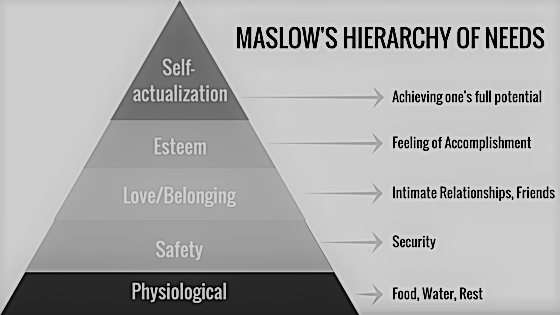
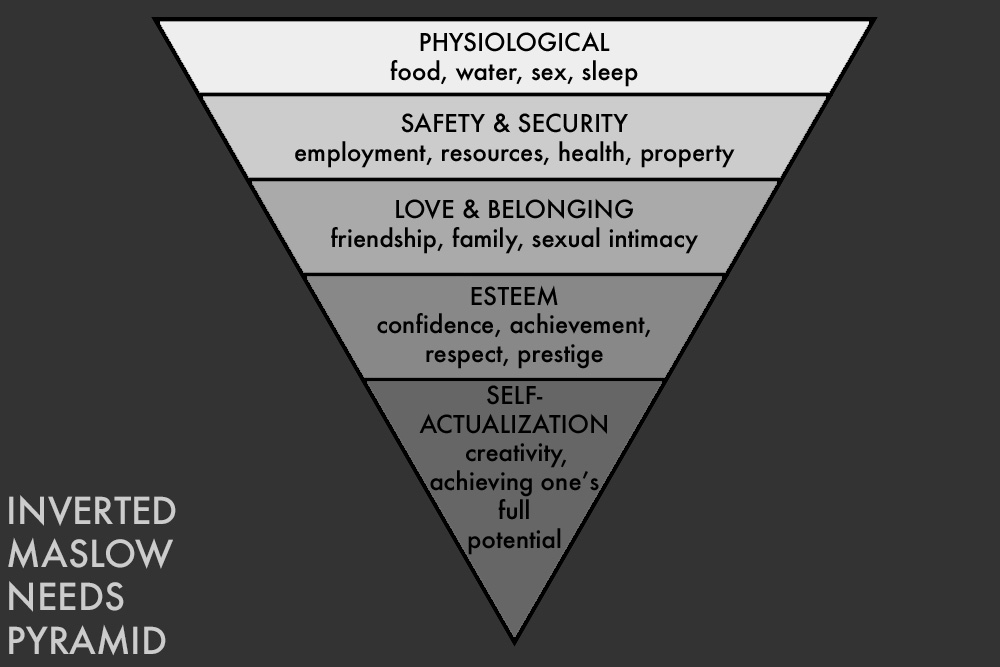
She gave us a new way of looking at the Maslow’s Hierarchy of needs. What if we see the triangle upside down. Does it still make sense to us? Can a person not be happy even with all the basic needs met? Is self-actualisation and happiness more important than everything else? She says, for her the Pyramid could is inverted and it still makes sense to her. Hmm.. interesting..

After talking to her I was tempted to visit her Farm one day, and I will for sure. But a great respect dawned on me for her work and a lot of clarity too.

Do follow her on Instagram :
https://www.instagram.com/thefarmandlove/

And check out her amazing work on her website:

http://www.protecterraef.org/

You can drop her a message and visit her Farm to see the amazing work being done.

But for now, back to our work

Talk to Experts #1

Pratibha

“We used chemical laden products in our childhood because w had no idea. Now that we have safe and better options, why not use them? Remember, organic doesn’t mean it will suit everyone.

We talked to Pratibha, who is an eco blogger and a green living enthusiast. We found her online, where she was talking about organic products that she tries out and recommends.

When we approached her, she was initially surprised that students from NID were interested in things like green living or sustainability. Here we get a clue of how design students are perceived by some of the outside world. Praveen nudged us to consider how we might change that narrative of NID in the outside world

She started looking into natural and organic cosmetics when she came across one such product in a store. She thought it would be a good idea to use such products for her twin boys which were just one year old. As she read more about these products, she got the environmental impact of the things we use. She started to made changes in the rest of her life too. Simple small products seem to have big changes. An example she gave was, a detergent that she used to clean her dishes and floors created waste water, which was harmless enough to water her plants with.

How do you know products are actually what they claim to be?

-Be a responsible consumer

-Contact the owners, demand for answers

-Genuine companies will not hesitate to give an ingredient list

You can contact Pratibha here:
https://pratsmusings.com/

Talk to the Experts #2

Manvendra Singh Inaniya

Manvendra Singh Inaniya

A Small Intro:

I’ve known Manvendra(I call him Sunny) since my 9th standard and even then he was a person who would wanna do things his way and live life to the fullest. A dropout from VIT Mechanical Engineering, he was on a quest to understand his purpose of life, he did odd jobs, slept on the streets, worked with NGOs. Then for a long time he was working in Greenpeace Organisation. He later moved on to Bhoomi college, learned about nature with nature , lived in a house made by himself without electricity. Currently he is making forests.

Do check out his Youtube talks to know a lot more about him and make hire him to make forest in your locality 🙂

https://www.youtube.com/watch?v=4bDkmy5j2O0

https://www.youtube.com/watch?v=1nE4xinF30g

So,

We thought we’d contact him to know more about his way of life. We had a Skype call with him. So he had very practical view on Sustainability. Being a person who had once lived completely sustainable once (drawing water from the mountain streams, making fire and cooking, zero electricity usage being some of them), his view was that a sustainable way of living was about conflicts. Of sacrificing and making a choice or letting go of some choices. He didn’t believe that any amount of talking and preaching on sustainability would do any good unless one has experienced it to its extreme . Talking about Sustainability was the easiest to do, according to him, in the comforts of your surrounding.

His advice was to live with less. He didn’t want to be frustrated on life and to be too hard on oneself for living sustainable. He didn’t wanna,’Kill my desires’. He would take abandoned things from Lost and Found section, Use Locally produced things, Use less energy , Pro create with the people around him.

He was happy that we were talking and thinking in such lines. But in simple terms for him – Life is simple and easy. Don’t try to be too hard on yourself.Live Simple, Love all- Those were the best ways to be sustainable.

FIN.

🙂

Back to Square One?

We had a talk with Sooraj S S(NID Product Design 2019 Graduate) , who had done his project on “Possessed by Possessions” and a Graduation Project on “Right to Repair”. Talking to him for almost 3 hours gave us some feeling of hope. He gave us a small glimpse of the other side of the whole system. “What if its actually good?” “Maybe Industrialization got the cost down so low that everyone could afford it?”. They looked mainly into the Behavior patterns of the customers and their decision making and buying choices. He told us System is like a “Bag of jigsaw that is shuffled and juggled till it all fits perfectly in each other ”

Useful Insights for us :

  1. Look for small change- they can create huge ripple effects and can be implemented easily.
  2. Start connecting dots- think in multiple and parallel lines
  3. Think of as many keywords as possible
  4. Think of ways to create Impactful Awareness.
  5. How to design to make things satisfactory enough

Do look up their amazing work on https://www.behance.net/gallery/59486589/Systems-Design-Possessed-by-possessions

Today we started the day with trying to trace our personal journey to this topic. When did each one of us become so conscious about having so many products and not buying more? Was is always about sustainability, recycling etc…? and after having a walk through our memory lane we realized, it all started with money. As a child we were just made very conscious about spending the money we had.Words such as sustainability and recycling were not in our dictionary then. Recycling was jugaad that we did to save money. It was natural to use broken and thrown away thing to make it into something useful to save the money we had. Maybe this extended on and became a way of life for us. That got me thinking , were kids a good target to concentrate on? “Catch them young?”

Afternoon we attended the talk by Rebecca Reubens (Author of the book Bamboo), who talked about the History of Sustainability. It was refreshing to see words and aspects we were addressing put very well structured and in a linear way. It was an easy story that gave us a good idea about how it all started. While talking to her personally we realized , we had moved so away from our initial topic that now we had no idea where we were. We wanted to know how we can impact the system. Understand buying behaviors, Understand Economics and the capital aspect, and where do we fit in as consumers who are designers.

“What did we want out of this project?” “What to do tomorrow?” and most importantly “What was our topic?”

The 3 LOST SOULS

So we had a topic we all really wanted to question and know more about. I didnt matter if someone had already done it (and they had), this was for US and we were in it for a reason

For Juthika (lets just call her Ju for her cuteness and my ease of typing ), it was to understand the Materials. She had a background in Pharmacy and a Masters in Green Technology. She knew a lot of materials and had a much better understanding of the technical side of it. She was questioning the need of why materials are choosen for a particular product. Why do we need so many products.?

For Shibin, starting with Artificial intelligence and patterns of choice making.Getting deep into it, Technology and Digital was just a subsystem of the whole system and that drew him to the decision making and the whole system of products and their life

and for me, well I was debating the need of more redundant products in this world. Simply put, why do we need another fridge or washing machine to be designed where there are already so many existing? Why cant a company just do a proper research and come up with one good product rather than have so many varieties? Do we even need designers..? what is my role(identity crisis?)

So thus started the journey of the 3 Lost Souls. May the force be with them. Amen.