Talk to Experts #1

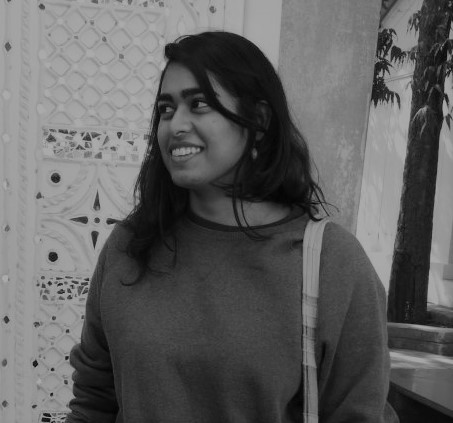
Pratibha

“We used chemical laden products in our childhood because w had no idea. Now that we have safe and better options, why not use them? Remember, organic doesn’t mean it will suit everyone.

We talked to Pratibha, who is an eco blogger and a green living enthusiast. We found her online, where she was talking about organic products that she tries out and recommends.

When we approached her, she was initially surprised that students from NID were interested in things like green living or sustainability. Here we get a clue of how design students are perceived by some of the outside world. Praveen nudged us to consider how we might change that narrative of NID in the outside world

She started looking into natural and organic cosmetics when she came across one such product in a store. She thought it would be a good idea to use such products for her twin boys which were just one year old. As she read more about these products, she got the environmental impact of the things we use. She started to made changes in the rest of her life too. Simple small products seem to have big changes. An example she gave was, a detergent that she used to clean her dishes and floors created waste water, which was harmless enough to water her plants with.

How do you know products are actually what they claim to be?

-Be a responsible consumer

-Contact the owners, demand for answers

-Genuine companies will not hesitate to give an ingredient list

You can contact Pratibha here:
https://pratsmusings.com/

Talk to the Experts #2

Manvendra Singh Inaniya

Manvendra Singh Inaniya

A Small Intro:

I’ve known Manvendra(I call him Sunny) since my 9th standard and even then he was a person who would wanna do things his way and live life to the fullest. A dropout from VIT Mechanical Engineering, he was on a quest to understand his purpose of life, he did odd jobs, slept on the streets, worked with NGOs. Then for a long time he was working in Greenpeace Organisation. He later moved on to Bhoomi college, learned about nature with nature , lived in a house made by himself without electricity. Currently he is making forests.

Do check out his Youtube talks to know a lot more about him and make hire him to make forest in your locality 🙂

https://www.youtube.com/watch?v=4bDkmy5j2O0

https://www.youtube.com/watch?v=1nE4xinF30g

So,

We thought we’d contact him to know more about his way of life. We had a Skype call with him. So he had very practical view on Sustainability. Being a person who had once lived completely sustainable once (drawing water from the mountain streams, making fire and cooking, zero electricity usage being some of them), his view was that a sustainable way of living was about conflicts. Of sacrificing and making a choice or letting go of some choices. He didn’t believe that any amount of talking and preaching on sustainability would do any good unless one has experienced it to its extreme . Talking about Sustainability was the easiest to do, according to him, in the comforts of your surrounding.

His advice was to live with less. He didn’t want to be frustrated on life and to be too hard on oneself for living sustainable. He didn’t wanna,’Kill my desires’. He would take abandoned things from Lost and Found section, Use Locally produced things, Use less energy , Pro create with the people around him.

He was happy that we were talking and thinking in such lines. But in simple terms for him – Life is simple and easy. Don’t try to be too hard on yourself.Live Simple, Love all- Those were the best ways to be sustainable.

FIN.

🙂

Back to Square One?

We had a talk with Sooraj S S(NID Product Design 2019 Graduate) , who had done his project on “Possessed by Possessions” and a Graduation Project on “Right to Repair”. Talking to him for almost 3 hours gave us some feeling of hope. He gave us a small glimpse of the other side of the whole system. “What if its actually good?” “Maybe Industrialization got the cost down so low that everyone could afford it?”. They looked mainly into the Behavior patterns of the customers and their decision making and buying choices. He told us System is like a “Bag of jigsaw that is shuffled and juggled till it all fits perfectly in each other ”

Useful Insights for us :

  1. Look for small change- they can create huge ripple effects and can be implemented easily.
  2. Start connecting dots- think in multiple and parallel lines
  3. Think of as many keywords as possible
  4. Think of ways to create Impactful Awareness.
  5. How to design to make things satisfactory enough

Do look up their amazing work on https://www.behance.net/gallery/59486589/Systems-Design-Possessed-by-possessions

Today we started the day with trying to trace our personal journey to this topic. When did each one of us become so conscious about having so many products and not buying more? Was is always about sustainability, recycling etc…? and after having a walk through our memory lane we realized, it all started with money. As a child we were just made very conscious about spending the money we had.Words such as sustainability and recycling were not in our dictionary then. Recycling was jugaad that we did to save money. It was natural to use broken and thrown away thing to make it into something useful to save the money we had. Maybe this extended on and became a way of life for us. That got me thinking , were kids a good target to concentrate on? “Catch them young?”

Afternoon we attended the talk by Rebecca Reubens (Author of the book Bamboo), who talked about the History of Sustainability. It was refreshing to see words and aspects we were addressing put very well structured and in a linear way. It was an easy story that gave us a good idea about how it all started. While talking to her personally we realized , we had moved so away from our initial topic that now we had no idea where we were. We wanted to know how we can impact the system. Understand buying behaviors, Understand Economics and the capital aspect, and where do we fit in as consumers who are designers.

“What did we want out of this project?” “What to do tomorrow?” and most importantly “What was our topic?”

The first stop

So the straight forward and one of the things to do was to map the stakeholders. But as we kept adding it we realized, who wasn’t a stake holder in this system? Everybody is a very easily either a buyer or a producer in one way or the other.

Stakeholders? EVERYONE!!!

STOP.BREAK.BREATH.

Wait!There is no much already, some and talked about. What are we gonna do differently.Just Collecting data and making redundant collection would be of no use if nothing was done with it. So we stopped. And thought.

Where could we make an impact as a designer. What was our role out there?Where do we fit in and how can use the power to make a difference. And mostly what difference did we wanna make?

So we tried looking into people, companies and startups and initiatives that are trying their bit to help the planet. We created the ‘Wall of Honour’.

Wall of Honour

Also the question bank- throwing in all the questions that pop-ed up in our head.

Questions

Parallely Ju tried to trace the journey of a product to get an idea about what might be happening. She choose the common villian of the planet- a water bottle.

<photo>

And the process also gave her with new insights. The plastic in a Pet bottle is the same as polysterene that is used in textile industry.Then why isnt it talked about? Who is passing on this information that something is bad. Where does our information come from?

The confusion

So, we got excited and we wanted to do it all, address it all and know it all. Introducing the Data Dumping wall. We read , searched , tried to make sense, slept off, had chai, tried reading again, slept off(again), got mind-fucked, ran away from the studio and helped each other stay not depressed and or insane.

We were initially looking into

  1. Psychology of Buying –
    • why do we buy things
    • what pushes us to buy things we already have
    • why are there so many varities of a product
    • what makes them happy ?
  2. Materials
    • who makes the material decisions
    • how is a material decided for a product what are the parameters
    • does the product drive the material or vise versa
    • what is the life cycle of a product
    • how much and from where does a user get information ?
  3. Economy
    • who makes the decision to launch a product
    • when to launch the product
    • who bears the actual cost of the product ?

So we started (randomly) dumping every word we could think was related,every topic, every word, every bit of information. We dumped it all. After almost a week of watching videos,trying to read books and talking, we asked ourselves, ” ok… what are we doing ? we are going through existing data and collecting them and making another set of data.For What? Are we just collecting Redundant data? what is our purpose of this project? what are we trying to achieve from it? what are we doing ?”

The 3 LOST SOULS

So we had a topic we all really wanted to question and know more about. I didnt matter if someone had already done it (and they had), this was for US and we were in it for a reason

For Juthika (lets just call her Ju for her cuteness and my ease of typing ), it was to understand the Materials. She had a background in Pharmacy and a Masters in Green Technology. She knew a lot of materials and had a much better understanding of the technical side of it. She was questioning the need of why materials are choosen for a particular product. Why do we need so many products.?

For Shibin, starting with Artificial intelligence and patterns of choice making.Getting deep into it, Technology and Digital was just a subsystem of the whole system and that drew him to the decision making and the whole system of products and their life

and for me, well I was debating the need of more redundant products in this world. Simply put, why do we need another fridge or washing machine to be designed where there are already so many existing? Why cant a company just do a proper research and come up with one good product rather than have so many varieties? Do we even need designers..? what is my role(identity crisis?)

So thus started the journey of the 3 Lost Souls. May the force be with them. Amen.

Lets Start!

So finally the most heard about, the most anticipated course for Product Design was here. It welcomed us with mixed emotions-Should we be happy that finally we get to see the bigger picture of a system and understand it from a broad perspective or should we be sad that there is only 10 weeks left for us in this campus.. 10 weeks(thats just 2 and a half month) and we are not ready to go….Just not ready to say goodbye.

Anyway back to Systems.

The first day first class of Systems . Praveen(Our course Guide) took us through a small walk through a few previous projects done before, the Giga maps just to give us a gist of the kind and range of problems we can deal with.

Well, Interesting and tempting but still very unsure.What do we do again?

The first two weeks classes are with TAD ( Transportation and Automobile Design) and PD(Product Design) combined. It was good and refreshing to have new people and faces around for a change and I must bring it to the readers notice that even with an hours travel to and fro, the TAD guys had so much more energy and life!!!

The first activity -1.How are we feeling today ? 2. What are we expecting out of this course? A few games in the lawn to understand how Systems work and back to the classroom

<photo>

So then Praveen told us to think of bigger problems, ‘Wicked Problems’.. wicked problem?? Interesting word ‘wicked’, but whats a wicked problem?

WICKED PROBLEMS:

So what is a wicked problem? Is it like a villian in the story,Is it like an anti-hero? Should we be scared of it?

So, Wicked problem unlike what it might sound like arent wicked in their nature, just in wicked in ways it can be tackled. By definition a wicked problem is, “wicked problem is a problem that is difficult or impossible to solve because of incomplete, contradictory, and changing requirements that are often difficult to recognize. The use of the term “wicked” here has come to denote resistance to resolution, rather than evil.”

So simply put in laymen terms,do you know something that has

1.Many layers of problem that are unknown,

2.No clear solution, unforseen outcomes,

3.No stopping point ,

4.High interdependence ?

Voila! you have found yourself an idle wicked problem.

Large volumes of newspapers, old magazines were pulled out to expand our thinking horizons, stalking news(maybe people too..;)), social platforms, talking to people (everywhere )and here is our data collections of problems we could qucikly pull out of our minds.

<photo>

<photo>

And after 15 minutes of starting at the board full of problems we narrowed down a few (4 votes each for problems excluding your own). These-

<photo>

A few days were spend debating and collecting brief data about each topic that excited us and we finally found peace (or was it disturbance?) with “Over consumerism” .

And so a team was formed (Juthika, Shibin and Tanya)and a broad mutually excited topic was agreed upon and shaken hands upon.

And thus we start.